
Sleeping Through a Revolution
For filmmakers and storytellers, ignoring the new realities of the changing entertainment industry is simply not an option.

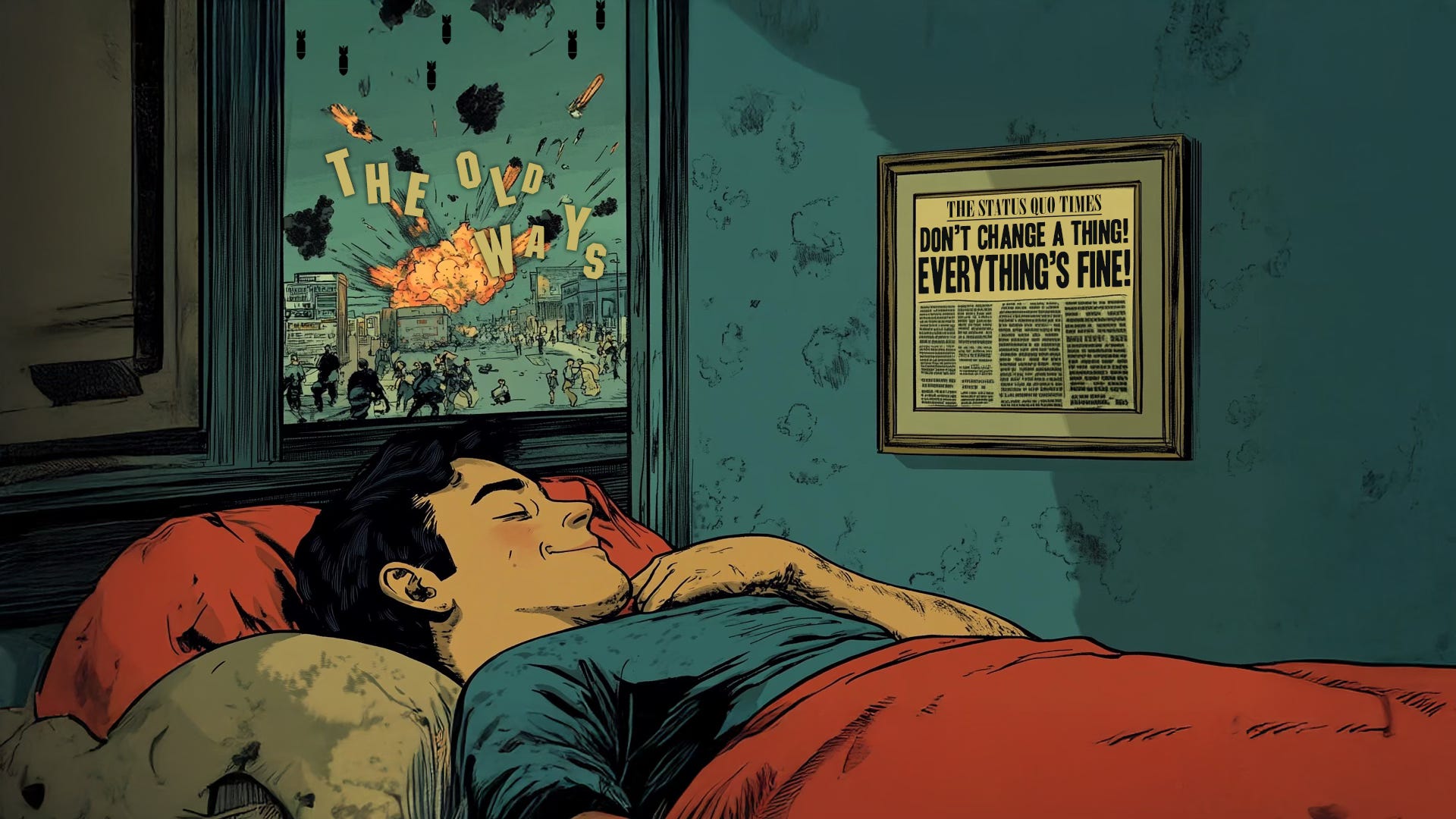
Ok, follow me on this.
A Brief History of Plastics
In the early 20th century, a man by the name off Leo Baekland developed the first fully synthetic plastic known as Bakelite, a dramatic improvement upon 19th century plastics like Parkesine and celluloid. Bakelite was durable, sanitary, easy and cheap to produce at scale. It was also wildly versatile. After World War II, demand for plastics skyrocketed leading to even further advancement in plastic technology like polyethylene, PVC and nylon.
Today, plastics are ubiquitous. They are literally everywhere. But not long ago, data started to show that plastics are actually quite dangerous to the planet, to animals and to us. It is now believed that decades of scientific data may have been tainted because plastics, which can easily leach chemicals like BPA and phthalates into experiments, were used consistently in labs. And recent studies suggest that micro-plastics (the byproduct of plastics as they decay) can be found in virtually every human and animal on the planet… and no one really knows exactly what the impact of this fact may be.
But the plastic industry just keeps moving forward. In 2023, global plastic producers hit a global market value of $712 billion, and analysts suggest that the market could grow at an annualized rate of 4%, eclipsing $1.05 trillion in value by 2033. So in spite of all the warning signs, industries and investors are simply moving ahead as if there isn’t about to be a real problem. They are closing their eyes, and hoping that when they open them again, everything will just go back to the way it was.
Sound familiar?
To say that the old entertainment industry is faltering may actually be an understatement. Literally, every day, more data comes out showing clearly that consumers are shifting away from the old business models.
As I have said repeatedly, the audience is screaming. They want something different than what the big players are offering. While that may be a catastrophe for the old systems, it is an extraordinary opportunity for those willing to adapt to these new realities.
But, change is hard. And for filmmakers and storytellers, this radical transformation can feel scary and overwhelming. I’ve heard it repeatedly from my fellow creators: “The process of telling stories is already enormously challenging. And the idea of having to change the way I do things; the way I approach my work; having to learn new tools; adding even more things to my list of essential tasks… just seems impossible.”
I completely get it. But, here’s the truth: the new entertainment industry isn’t on its way… It’s here. And the people who are taking the lead are those who are embracing the moment: Filmmakers using all of the newest tools and methods to build an audience around their project, even before it’s made; learning new technologies to make their projects for a fraction of the cost; embracing new formats, styles and platforms.
The point is, there is a vacuum that has formed between the old systems and audiences. And that space is being filled by those who are jumping in to the new reality with both feet. Now before you panic too much, there is time. If you start educating yourself and doing the work of embracing the new entertainment industry right now, you are still early.
But, what you can’t do is sleep on this.
Now, when it comes to the art of “avoidance coping,” I consider myself a master. So, I understand the temptation to just close our eyes and hope things go back to the way they were. Sadly, that isn’t an option right now. If you want to plant your flag in the new entertainment industry, you have wake up every day and do the work. Believe me, it’s a pain in the ‘ol arse. There are days when it just seems like too much. But, I promise you… this isn’t going away. We simply can’t ignore it. We also can’t fake it. We need to become fluent in this new language or risk being left behind.
So, what’s it going to be? Are you going to do the work to put yourself where the audience is? Or are you gonna close your eyes and hope things change back? I know what I’m going to do.
Now, I have to keep this one short. I gotta get back to my desk. I’m trying to learn how this whole AI thing works.